It Isn't 'Just Getting Older': The Overlooked Reason Words and Names Start to Slip After 55 — And the Three Nobel-Winning Clues One Doctor Built Into a Single Formula
Walking into a room and forgetting why. Losing a familiar name mid-sentence. For years it was written off as normal aging. A newer line of research points somewhere else entirely — to three things the brain quietly stops doing well, each of them traced back to a Nobel Prize.

You know the moment. You walk into the kitchen for something — and stand there, blank, waiting for the reason to come back. A name you've known for thirty years sits right on the tip of your tongue and simply won't arrive. You read the same paragraph three times and none of it sticks. It's a small, quiet thing. But it happens a little more often than it used to.
If any of that feels familiar, it's worth knowing how much company you're in. In surveys, the majority of adults past 55 say their recall isn't as quick as it once was — the misplaced keys, the word that's right there but won't come, the reason for the trip upstairs that evaporates on the third step. Most people never say it out loud. They laugh it off, blame a bad night's sleep or a long week, and move on. And quietly, many of them start to wonder.
But a growing group of researchers has been asking a more useful question. Not "how old are you?" — but "what is actually changing inside the brain when focus starts to slip?" And the answer that keeps surfacing has surprisingly little to do with age itself.
First, the reassuring part: it's usually not what people fear
When recall gets fuzzy, the mind tends to jump straight to the worst-case scenario. But researchers who study everyday forgetfulness draw an important line between two very different things.
On one side are serious medical conditions — a matter for a physician, and not what this article is about. On the other, and far more common, is the ordinary, gradual slowdown that shows up as fog, distraction, and slower recall. This second kind, the research increasingly suggests, is less about the brain breaking down and more about the brain's upkeep quietly falling behind.
The little moments researchers hear about most
- A familiar name that's right there, but won't come out.
- Walking into a room and forgetting the reason.
- Losing the thread halfway through a sentence — "…now, what was I saying?"
- Rereading the same paragraph because none of it landed.
- Hunting for keys, glasses, or the phone that's in your hand.
- A "senior moment" that seems to show up more than it used to.
To understand that maintenance, you have to follow a trail that runs through three of the most celebrated discoveries in modern medicine — three findings that, remarkably, each earned a Nobel Prize.
Three Nobel Prizes, one surprising through-line
Over the last century, three separate teams of scientists cracked three separate pieces of how memory actually works. For decades they sat in different textbooks. Only recently have researchers begun to connect them — and together they tell a strikingly clear story about why thinking gets foggy, and where to look.
The brain's own repair signal — it helps neurons survive, mend, and stay connected. Levels tend to drift down over the years.
The discovery that the adult brain can still form new connections — and that a growth factor called BDNF helps drive it.
Acetylcholine, the chemical that carries signals between brain cells. When it runs low, recall and reaction slow.
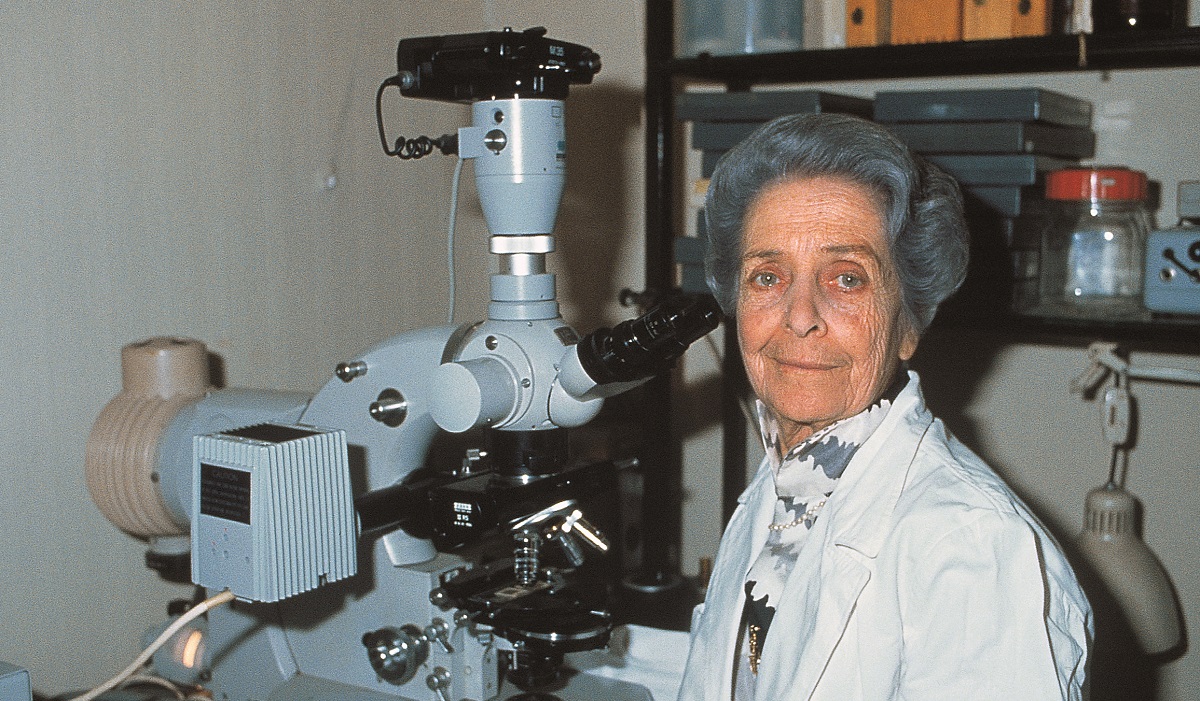
Working for years — at times in a makeshift lab in her own bedroom — Levi-Montalcini identified a tiny protein she called nerve growth factor, or NGF: one of the brain's own maintenance signals. Think of it as the crew that keeps the roads open between brain cells. When that crew is fully staffed, thoughts travel quickly and cleanly. When it's short-handed, traffic slows — and it's felt as fog, blanking, or that maddening tip-of-the-tongue pause.
So what actually changes over the years?


Here is where the three discoveries line up. Researchers describe a handful of shifts that tend to happen quietly with the years — and together they help explain that all-too-familiar fog:
Repair signals drift downLevels of maintenance proteins like NGF and BDNF tend to decline over time, so the brain's self-repair and new-connection building run slower than they used to.
The messenger runs lowAcetylcholine — the chemical behind quick recall — tends to fall with age. Researchers note that more frequent "senior moments" can be a tell-tale sign of exactly this.
"Brain rust" and build-up accumulateEveryday free-radical damage and small fatty deposits can gather in brain tissue, getting in the way of clean, fast communication between cells.
Notice what none of these are: willpower, discipline, or "just paying more attention." You can't concentrate your way out of a maintenance problem. And that single insight is what set one doctor on a very different path.
Why crosswords and single-ingredient pills tend to disappoint
This is also why so many of the usual fixes leave people underwhelmed. Puzzles and brain games are pleasant, but they don't touch the underlying upkeep. And most memory supplements, as one physician bluntly put it, poke at just one piece of the puzzle — a single ingredient aimed at a single pathway.
Typical memory pills
- One or two ingredients
- Target a single pathway
- Ignore inflammation & build-up
- Often a hidden "proprietary blend"
The 11-nutrient approach
- 11 nutrients working together
- Supports all three Nobel pathways
- Includes antioxidant & BDNF support
- Full label published openly
If several things are shifting at once, nudging only one of them isn't likely to move the needle much. It's like changing a car's air filter and expecting it to fix the brakes, the battery, and the tires too. That frustration is exactly what led one doctor to try something different.
The doctor who decided to support all three at once

Dr. Frank Shallenberger has spent more than four decades studying how the body ages — and, in particular, how to help it age well. Over the years he kept hitting the same wall with brain health: patients wanted to feel sharp again, but the products on the shelf were built to poke at a single mechanism.
His conclusion was simple, almost stubborn: if the fog comes from several changes happening together — repair signals fading, the messenger running low, build-up accumulating — then a serious approach has to support all of them, not pick one and hope.
So he went looking for nutrients tied to each of the three Nobel pathways. And one of them surprised him.

An antioxidant called Luteolin
When he compared dozens of nutrients for their effect on NGF — the brain's repair signal — one plant antioxidant stood out ahead of the rest, and it's also studied for calming the inflammation tied to cloudy thinking. Exactly why it outperformed the others is the part he walks through on the next page.
The 11-nutrient approach he landed on
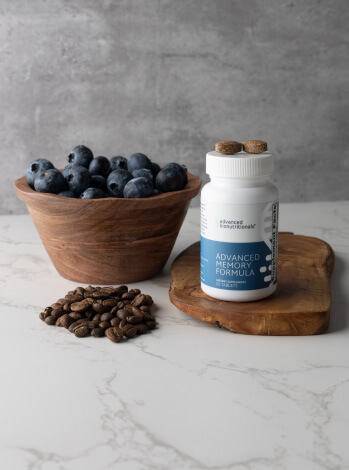
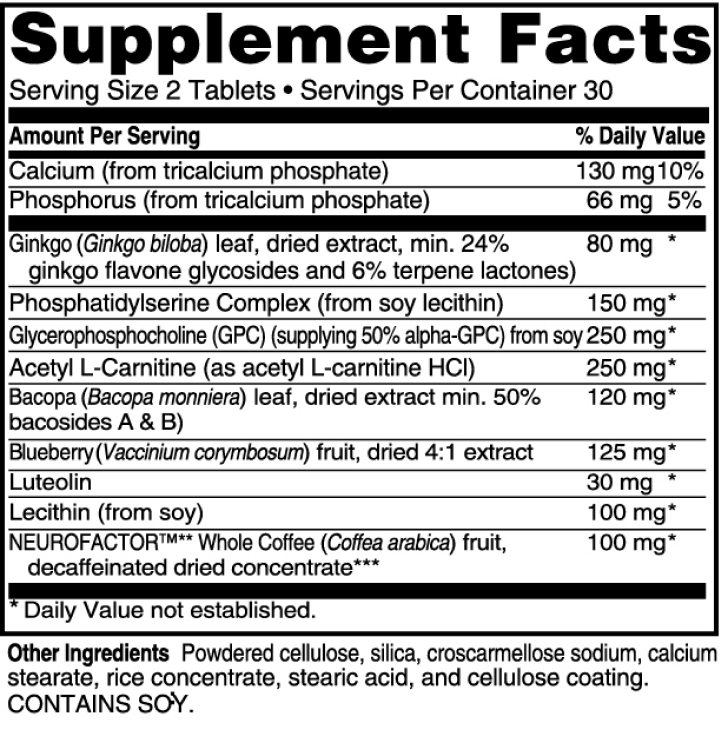
The result was Advanced Memory Formula — built around 11 nutrients, each chosen for a job. A few of the ones researchers find most interesting:
The standout antioxidant for supporting NGF, the brain's repair signal — also studied for easing the inflammation tied to fog.

A patented whole coffee-fruit extract, studied in a placebo-controlled trial for raising BDNF, the new-cell growth factor.

Studied for replenishing acetylcholine — the "messenger" tied to quick recall and reaction time.
A building block of brain-cell membranes, studied across decades of research for supporting memory and mental sharpness.
Studied as a brain "energizer," with benefits reported in adults well into their later years.

A traditional herb studied for helping people take in new material faster and filter out distraction.

Long used to support healthy blood flow to the brain and everyday mental energy.
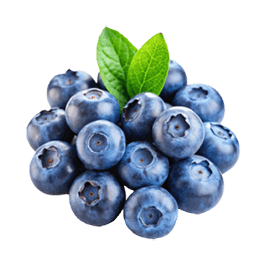
Antioxidants that cross into the brain — studied for helping scrub away the "rust" of free-radical damage.
Rounded out with lecithin and brain minerals, that's 11 in total. Individually, none of these is exotic — you'll find several woven through the nutrition research going back years. What's different, in Shallenberger's view, is combining them so the brain's upkeep is supported across all three Nobel pathways at once, rather than just one.
What people tend to notice — and when

Nutrients aren't medications, and they don't work like a light switch. In the feedback the company has collected, people describe a gradual shift rather than an overnight change. A rough pattern comes up again and again:
Many describe the earliest change as subtle — a little less of the "static," slightly easier to stay with a task.
This is where reviews most often mention the fog starting to lift — words arriving faster, fewer lost trains of thought. It's also the window the maker's guarantee is built around.
A phrase that keeps recurring: the sense that "the switch flipped" — feeling sharper and more like themselves.
The reports lean toward steadier focus through the day and quicker recall becoming the new normal.
As with anything, results vary from person to person — some notice more, some less, some sooner. But the word that keeps surfacing in the reviews is the same one people used to dread: fog — usually in the past tense.
In their own words
"As I aged I noticed my thought process slowing down — I was struggling to find words. Within a few weeks my thoughts come to me much easier. It changed my life."
"I'm a 73-year-old woman and I'd had brain fog for ten years or more. Nothing really helped — until this. I was able to recall words in the middle of conversations again."
"After about a month, the switch flipped and I felt sharp and witty again. It was a good feeling."
"I'm 78, and I feel as sharp mentally as I was ten years ago."
Verified customer reviews shared by the maker. Individual results vary.
The company behind the formula, Advanced Bionutritionals, reports thousands of customers and an average of about four stars across more than a thousand reviews.
Is it worth trying?
That's a personal call — but the makers have tried to take the risk off the table. Advanced Memory Formula comes with what they call a "Down to the Last Pill" guarantee: they expect people to notice an improvement in as little as three weeks, and you can finish the bottles — even empty them — and still send them back within 90 days for a full refund of every penny paid, including original shipping.
GUARANTEE
"Down to the last pill" promise. Try it for a full 90 days. If you're not thrilled, return the bottles — even empty — for a full refund of every penny, including original shipping. Full details are on the official page.
Common questions
The bottom line
Everyday "brain fog" is far more often a matter of the brain's upkeep slowing down than anything to fear — and that upkeep traces back to three Nobel-winning discoveries: the repair signal NGF, the growth factor BDNF, and the memory messenger acetylcholine.
Rather than poke at one pathway, Dr. Shallenberger built an 11-nutrient formula to support all three at once — backed by a 90-day, money-back guarantee, so the only real way to know is to see the research and decide for yourself.
The full explanation — how NGF, BDNF, and acetylcholine fit together, what each nutrient is doing, and how the formula is meant to be taken — is laid out in detail on Dr. Shallenberger's official page. It's worth reading to the end, because the part about how quickly some people notice a difference is the detail most people miss.
 Show Me The Full Report & Details
See the research, the guarantee, and today's pricing
Show Me The Full Report & Details
See the research, the guarantee, and today's pricing